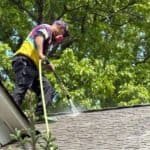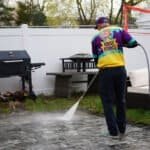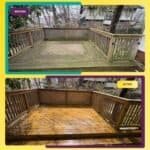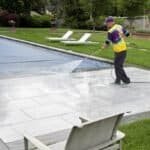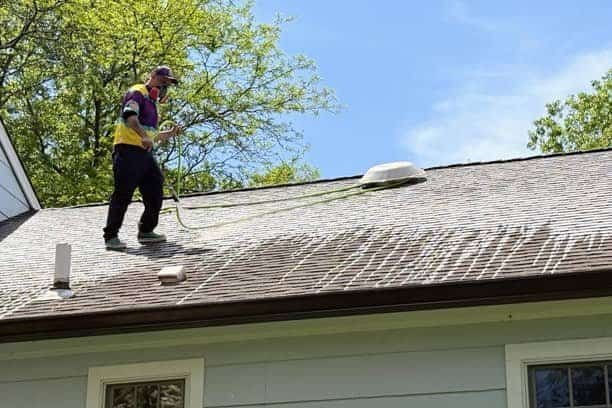
If you’re seeing black streaks running down your roof shingles, especially on the north-facing slope, you’re not alone.
Across West Orange, Livingston, Montclair, Maplewood, Glen Ridge, Verona, Short Hills, and Essex Fells, roof streaking is one of the most common exterior issues we evaluate at Rinse Prince Pressure & Softwashing.
And here’s the truth:
It’s not dirt.
It’s algae.
What Those Black Streaks Actually Are
The streaking you see is typically caused by Gloeocapsa Magma, a type of airborne algae.
It feeds on the limestone filler found in asphalt shingles.
In New Jersey’s humid climate, it spreads easily.
Why Roof Algae Is So Common in Essex County
1️⃣ Humid Summers
Moisture retention creates ideal growth conditions.
2️⃣ Heavy Tree Coverage
West Orange and Montclair properties with mature canopy see faster streaking.
3️⃣ North-Facing Roof Slopes
Limited sun exposure prevents natural drying.
4️⃣ Freeze-Thaw Cycles
Moisture trapped in shingles accelerates wear.
Is It Just Cosmetic?
At first, yes.
But over time:
- Algae retains moisture
- Moisture weakens shingles
- Streaking spreads
- Roof lifespan can shorten
Ignoring it can lead to premature aging.
Why Pressure Washing a Roof Is Dangerous
At Rinse Prince, we never recommend high-pressure washing on asphalt shingles.
High pressure can:
- Strip protective granules
- Void manufacturer warranties
- Force water beneath shingles
- Shorten roof lifespan
Roof cleaning must prioritize preservation.
The Correct Roof Cleaning Method
We use a professional soft wash approach that:
- Applies a specialized treatment solution
- Eliminates algae at the root
- Uses controlled low pressure rinse
- Protects shingle integrity
Our philosophy is simple:
Protect the surface first. Clean thoroughly. Preserve long term.
What We See Most in West Orange
Steep rooflines combined with tree shade create streaking within 2–4 years.
Recommendation:
Evaluate roof condition every 2–3 years.
What We See in Livingston
Large homes often have complex valleys and moisture traps.
Recommendation:
Evaluate roof and gutters together to prevent runoff staining.
This is where bundled services often provide better long-term value.
How Often Should Roofs Be Cleaned in NJ?
Standard exposure:
Every 3–5 years
Heavy shade:
Every 2–3 years
Wooded properties:
Annual inspection recommended
Why We Insist on In-Person Evaluations
We do not diagnose roof cleaning over the phone.
Every roof is different.
During our onsite evaluation, we assess:
- Shingle condition
- Streak severity
- Access safety
- Gutter condition
- Surrounding tree coverage
Proper evaluation protects both homeowner and roof.
How Roof Cleaning Fits Into Our Package Structure
Many homeowners choose:
👑 Kings Crown – Full exterior system cleaning
👑 Crown Clean – Multi-surface balance
👑 Royal Refresh – Targeted treatment
Roof + house + gutter coordination reduces cross-contamination and improves overall curb appeal.
Frequently Asked Questions
Will roof cleaning damage shingles?
Not when soft wash methods are used properly.
How long do results last?
Typically 3–5 years depending on shade exposure.
Do I need to be home?
We prefer meeting homeowners to review findings and recommendations.
Final Recommendation
If you’re noticing black streaks on your roof in West Orange, Livingston, Montclair, Maplewood, or surrounding Essex County towns, the best first step is a professional evaluation.
At Rinse Prince, we prioritize roof preservation — not aggressive cleaning.
📞 973-814-2033
🌐 www.callrinseprince.com
Cleaning That Takes the Crown.